100+ Things I Do as Your Wedding Coordinator
(So you don’t have to)
You’ll probably never see most of this happening, and that’s the point.
My job is to hold the logistics, the emotions, the timing, the people, and the unexpected… so you can stay present for the best day of your life.
Before the Wedding: Planning, Vision & Strategy
Design the overall flow of your wedding day
Translate your vision into a realistic, executable plan
Brainstorm ideas that feel aligned with you
Propose Moab-specific ideas rooted in place, season, and landscape
Source and recommend trusted local vendors
Leverage long-standing relationships to solve problems quickly
Help you maximize your budget without sacrificing experience
Advise on quality vs. quantity when making purchases
Keep planning on track with weekly check-ins
Ask the questions you didn’t know you needed to ask
Prevent over-scheduling and decision fatigue
Build buffer time into your timeline
Create Plan A, B, and C for weather and logistics
Provide advice that only comes from lived wedding-day experience
Stay available via text so you’re never left guessing
The Big Picture: Protection, Calm & Decision-MakingServe as the single point of authority on wedding day
Handle all vendor communication so you can stay present
Advocate for your wants and needs with vendors and family
Enforce venue rules, permits, and local regulations discreetly
Identify and mitigate risks throughout the day
Monitor weather, terrain, and outdoor conditions in real time
Make judgment calls when plans need to change
De-escalate conflict before it reaches you
Quietly solve problems you never need to know about
Protect your emotional energy so you can enjoy your day
Be the calm in the chaos: steady, grounded, and unshaken
Optimize timing and movement to maximize flow and efficiency
Serve as the sole point of contact for all questions, all day
Shield guests from logistical or vendor issues so the experience stays seamless
Wedding Morning: Getting Ready & Grounding
Manage setup so spaces come together seamlessly
Keep the morning moving without stress
Track essential items (rings, license, shoes, vows, etc.)
Bring water and make sure you stay hydrated
Bring you a cocktail if that’s your vibe
Make sure you eat (even when you forget)
Handle light garment fixes and emergency alterations
Stain control (yes, I carry a Tide stick)
Constant primping duty, you don’t have a mirror, I have eyes on you all day long (and a mirror in my pocket)
Fix hair, makeup, and outfits before photos
Lint-roller everything, constantly
Regulate the energy in the room so nerves don’t take over
Take final, detail-oriented walkthrough before guests arrive
Handle wardrobe emergencies including broken shoes and accessories
Ceremony: Precision & Presence
Cue musicians, DJ, and officiant
Line up the wedding party
Usher guests and manage seating
Give first-time officiants public speaking tips
Guide deep breaths before walking down the aisle
Fix your dress right before you walk
Cry quietly while you walk down the aisle (because it’s beautiful)
Ensure sound checks and microphones are ready
Manage timing so the ceremony starts intentionally
Protect the emotional tone of the moment
Photos: Flow, Details & SupportAssist the photographer in getting predetermined shots
Advocate for your photo priorities if time gets tight
Fix hair, dress, and posture during photos
Straighten decor and details between shots
Manage group movement efficiently
Give sunset photo direction if your photographer isn’t local
Protect golden hour timing
Keep things moving without making it feel rushed
Reception: Guest Experience & Energy
Cue the DJ or MC throughout the night
Stage entrances and transitions
Confirm dinner timing with catering
Release tables for buffet service
Ensure guests with dietary restrictions are cared for
Prepare hot plates so you eat first
Set food aside so you actually eat
Manage speeches and hand microphones to speakers
Prompt speakers when they’re up next
Keep speeches on track when time matters
Light and relight candles as needed
Maintain aesthetics all night
Direct guests smoothly through the space
Care for guest needs as they arise (hydration, chargers, etc.)
Manage big emotions, happy, heavy, or complicated
Bring positive energy all day and all night
Actively manage guest movement, behavior, and needs throughout the day
Constantly straighten, reset, and visually refine the space as it’s used
Ensure parents and key family members are present for important moments
Physically manage doors and space for seamless grand entrances
Oversee welcome table setup, flow, and clarity for guests
Vendor & Team Management
Manage a calm, knowledgeable support team
Communicate quietly between staff at all times
Ensure vendors have what they need to do their best work
Translate your vision into clear vendor direction
Resolve vendor issues discreetly
Maintain communication with venue management
Confirm sound checks and technical needs
Ensure Utah bar laws are followed
Distribute gratuity if pre-arranged
Direct team movement during space transitions and room flips
End of Night: Closing the Loop
Oversee special exits (sparkler or otherwise)
Secure gifts and cards
Save flowers for you to take home
Handle bouquet management
Pack up rental items properly
Coordinate end-of-night cleanup
Ensure catering is cleaning as the night goes on
Final sweep so nothing is left behind
Ensure guests have a smooth, safe exit
Leave the venue better than we found it
The Intangible Stuff (The Real Value)
Hold the emotional weight of the day so you don’t have to
Read the room and adjust pacing accordingly
Know when to follow the plan, and when to break it
Make confident decisions so you can stay present
Protect moments you’ll care about for the rest of your life
What being a wedding coordinator means to me
Being a wedding coordinator isn’t about clipboards, color-coded timelines, or making sure the napkins are folded correctly. Those details matter, but they’re not the reason couples hire me.
To me, being a wedding coordinator in Moab means standing in the background of one of the most emotionally charged days of someone’s life and taking full responsibility for how it unfolds, in a place where logistics, landscape, weather, and timing all matter deeply.
It means being calm when other people can’t be.
Clear when plans shift.
Decisive when there isn’t time to hesitate.
And doing all of that quietly, so the couple never has to carry it.
I Curated My Life Around High-Stakes Days
Long before I coordinated weddings in Moab, my life revolved around high-stakes, experience-driven environments.
I’ve always been drawn to roles where presence, judgment, and timing are everything, where people are trusting you with moments that matter. From hospitality to emotionally charged events, I learned early on how to stay grounded when pressure is high.
Moab weddings are a natural extension of that work.
Between remote ceremony locations, public lands, permits, weather shifts, travel timing, and adventure-forward celebrations, this area requires a coordinator who understands both people and place.
Experience Changes How You See a Wedding Day
Working on more than 25 weddings in a single year, many of them destination weddings in and around Moab, taught me that no two weddings need the same approach.
Some couples need reassurance.
Some need space.
Some need firm boundaries.
Some need flexibility.
Some days are about protecting timelines. Others are about protecting moments.
Experience teaches you how to read the room, anticipate challenges, and adapt in real time, especially in an outdoor, desert environment where conditions can change quickly.
The goal isn’t perfection.
The goal is presence.
The Best Coordination Is Often Invisible
Some of the most important work I’ve done will never show up in photos.
A dress fixed minutes before portraits.
A timeline quietly restructured to save the sunset light.
A family dynamic diffused before it reaches the couple.
A logistical issue handled before anyone realizes there was a problem.
When coordination is done well, the day feels effortless, even in rugged, remote, or unconventional Moab locations.
The couple stays present.
The energy stays intact.
The experience feels held.
Logistics Are Emotional, Especially for Destination Weddings
Timelines aren’t just schedules. They’re emotional documents.
They carry expectations, pressure, family priorities, and meaning, especially when guests are traveling from out of town and the setting is as powerful as the red rock desert.
Knowing when to protect a moment and when to move things forward is one of the most important parts of my job as a Moab wedding coordinator.
That balance only comes from real, on-site experience.
Why I Take Wedding Coordination Seriously
Moab weddings are not one-size-fits-all.
They often involve:
Public lands and permits
Weather considerations
Multiple locations
Non-traditional timelines
Adventure-based celebrations
My role is to remove friction, so couples can experience their wedding day instead of managing it.
That responsibility matters to me.
Presence Is the Luxury I Care Most About
After dozens of weddings, one truth stands out:
The greatest luxury a couple can have on their wedding day is presence.
Being able to take in the landscape.
Feel grounded in the moment.
Laugh, cry, and be with their people, without worrying about what’s happening next.
That’s what I work to protect.
This Isn’t Just a Job, It’s a Responsibility
Being a wedding coordinator in Moab means understanding the land, the logistics, and the emotional weight of the day, and treating all of it with care.
It means showing up prepared, adaptable, and grounded.
Learning from every wedding and carrying that knowledge forward.
And creating space for couples to be fully present in one of the most meaningful moments of their lives.
That’s not something I take lightly.
The Fix No One Saw — and Why Preparation Matters
the fix no one saw and why preparation matters
Some of the most important moments on a wedding day are the ones no one ever knows happened.
One of my favorite examples of this involves something small, but incredibly high-stakes in the moment: a bridesmaid’s dress that didn’t fit.
I take a lot of pride in my wedding coordinator kit. Over time, it’s become a carefully curated collection of tools designed for exactly these kinds of moments. Earlier in the season, after struggling to mend a bridesmaid’s dress during portraits, I came home knowing I needed to level up. One of the first things I added was a stitch gun — a small tool that can make a huge difference when time is tight.
While I’m not a professionally trained seamstress, I grew up around sewing. My mother was an avid sewer, and I absorbed more than I realized just by watching and helping over the years. That foundation, combined with the right tools, has proven invaluable.
Immediately following one ceremony, a bridesmaid rushed up to me and said, “Shelby, my seamstress did me dirty. My dress is too tight — I can’t breathe.” The bridal party was about to be called for photos, so we had minutes, not hours.
I pulled her into a private space and assessed the dress quickly. The straps were sewn far too short, and the back clasp was uncomfortably tight. I looked at her and asked, “Are you okay if I cut your dress?” It was a risk — but I had a clear plan.
Using the mini shears from my fanny pack, I carefully snipped the straps that were causing the pressure and reworked them into a halter-style tie that preserved the look of the dress while giving her immediate relief. For the back, where the clasp sat higher than the zipper, I used my stitch gun to secure the straps lower on the dress, creating what looked like a cascading design detail rather than a repair.
The entire adjustment took only a few minutes.
When she stepped out to join the rest of the bridal party, the dress looked intentional, secure, and beautiful. In the photos, you would never know it had been altered on the fly.
The rest of the evening unfolded seamlessly. Later, as she gave her speech, I watched her stand confidently and comfortably beside her best friend — and felt proud knowing that a potential stressor had been completely removed from her day.
The bride and groom never knew there was an issue.
That’s often how the best coordination looks: quick thinking, quiet solutions, and preparation that allows the day to feel effortless for everyone else.
When Logistics Go Sideways — and Why Experience Matters
When logistics go sideways, trust the local
There are things that go wrong at every wedding. The key is solving them before anyone realizes they were ever problems.
This situation was different.
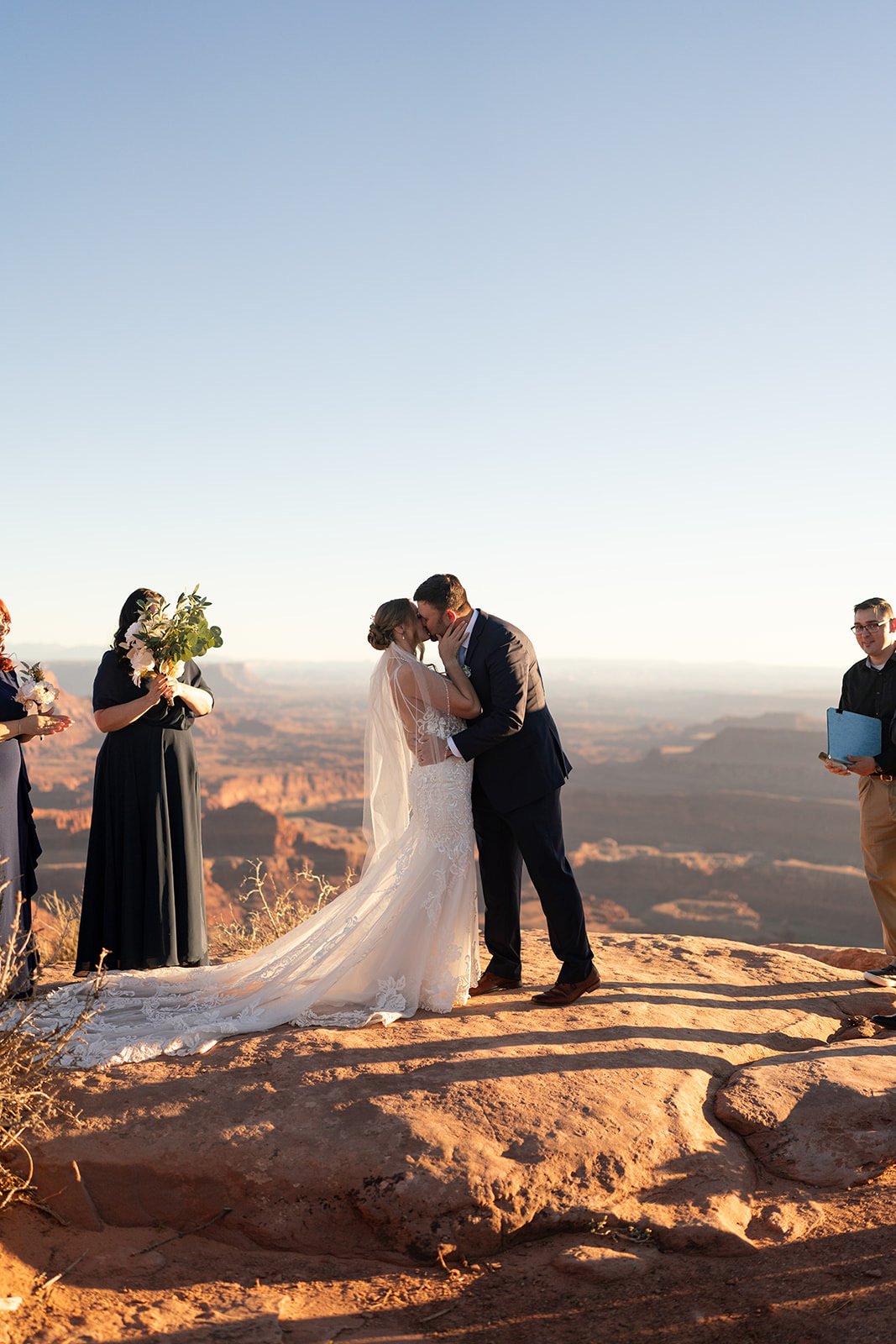
This wedding took place in Moab, Utah, with a sunset ceremony at Dead Horse Point State Park and a reception later that evening at the Hoodoo Moab. From the beginning, we were working with tight timing, multiple locations, and the added pressure that comes with a sunset ceremony in a state park — where light, access, and timing are non-negotiable.
During planning, the bride and I had detailed conversations about how her 40 guests would get to Dead Horse. She pre-purchased entry and parking passes, which we distributed before departure. I was assigned to lead the caravan in my own vehicle. Meanwhile, the couple met their photographer for their first look while all guests — including the wedding party — were instructed to head directly to the ceremony location to wait.
Despite clear instructions, the maid of honor and two bridesmaids decided to linger briefly to try to catch a glimpse of the first look. When they were shooed away, they continued driving — but missed the turn to Dead Horse and accidentally drove into Canyonlands National Park.
On a normal day, this would have been caught at the entrance gate. Unfortunately, this wedding took place during a government shutdown. There was no staff at the Canyonlands entrance to stop them. They drove deep into the park before realizing something was wrong.
If this had been any other guests, the ceremony would have proceeded without them. But this was the bride’s entire wedding party.
Once I was able to get them on the phone, calm them down, and determine their location, I gave clear directions to get them back on track. Only then did I take the situation to the bride.
Sunset ceremonies are always a race against the light. We had intentionally built in time after the ceremony for guests to enjoy the views and for the couple to take sunset photos — one of the main reasons they chose Dead Horse in the first place. At this point, we were facing a potential 30+ minute delay.
I pulled the bride aside, explained the situation calmly, and gave her the choice: proceed without her wedding party, or wait.
She chose to wait.
Immediately, the photographer and I adjusted the plan. Instead of losing valuable daylight, we used the unexpected window to complete family photos that had originally been scheduled for after the ceremony. I gathered family members, organized groups efficiently, and we used that time intentionally rather than letting it feel like a delay.
When the bridesmaids finally arrived, I met them in the parking lot, grounded them, and ensured they were emotionally ready to step straight into the ceremony. The ceremony began later than planned — but the light ended up being absolutely perfect. There was still ample time afterward for the epic Dead Horse sunset photos the couple had dreamed of.
While guests did wait longer than expected, the day never felt rushed or chaotic. The ceremony was beautiful, the photos were stunning, and the couple left feeling deeply satisfied with how everything unfolded.
Most importantly, I carried the lessons forward.
For the next Dead Horse ceremony I coordinated, we:
Had every guest save the location pin and download offline maps
Briefed guests on the proximity and confusion between the state park and national park
Ran a tight caravan with a designated caboose in radio communication
Brought a wagon stocked with water in case of extended time at the ceremony site
That wedding — and the rest of the day — went off without a hitch.
This is what real on-site experience teaches you: not just how to solve problems, but how to adapt, communicate clearly, protect the couple’s priorities, and improve systems so the same issue never happens twice.
Had I not stepped in quickly — with maps failing and guests unfamiliar with the land — there’s no guarantee the wedding party would have made it back in time.
Experience isn’t about perfection.
It’s about knowing what to do when perfection isn’t possible.
The start of something new
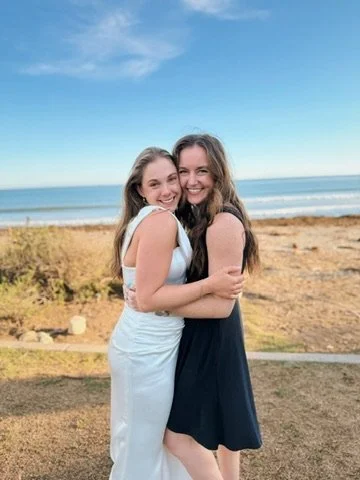
I got to show up for one of my best friends in the most beautiful way. A way that changed the trajectory of my life. I am so happy to be here.
On January 1, 2025, I attended a wedding that changed my life.
The story starts a few weeks earlier, when I got a call from a very close friend. Her Maid of Honor bailed, leaving her hanging. My heart broke for her. She had poured so much intention and care into planning her wedding and wanted nothing more than to be fully present on her day. Her MOH was supposed to make sure that happened.
I was meant to be just a guest.
With tears in her eyes and a shaky voice on the other end of the phone, she told me she needed help. That day, without knowing it, I said yes to a job that would change the trajectory of my life.
When the wedding day arrived, I showed up with bells on. It was a lower-budget, deeply intimate, self-planned wedding. They tied the knot overlooking the Pacific Ocean from a bluff in Santa Barbara, California, surrounded by forty of their closest friends and family. It was breathtaking. So were they.
It became my duty - and my honor - to make sure my bestie had the best day of her life.
The day unfolded into fourteen hours of happy tears, organizing people, setting up and breaking down multiple locations, keeping the timeline moving exactly how she wanted it, and ending the night dancing it all out. When I finally crawled into bed, I felt like I’d just finished a forty-ounce latte. Exhausted…. but buzzing.
How could something so labor-intensive feel so energizing?
The only other time I’d felt that way was years earlier, when I had the opportunity to ordain another friend’s wedding. Was it just because I love my friends so deeply? Maybe, I thought.
But later in the year, I realized something important: it didn’t matter whether I had best-friend rapport or the fondness of a newer connection. Showing up for people on their wedding day is an all-encompassing task - and one that happens to draw on (humble brag) every one of my natural gifts.
No job had ever felt so easy.
Not easy because it lacked hard work, but easy because it finally felt aligned. Like I had found work that didn’t just fill my soul, but wholeheartedly fueled it.
Three weeks later, just days shy of my 30th birthday, I was sitting across from my partner, Ricco, sharing an açaí bowl. I looked at him, eyes welling with tears, and said: This year, I’m becoming a wedding coordinator.